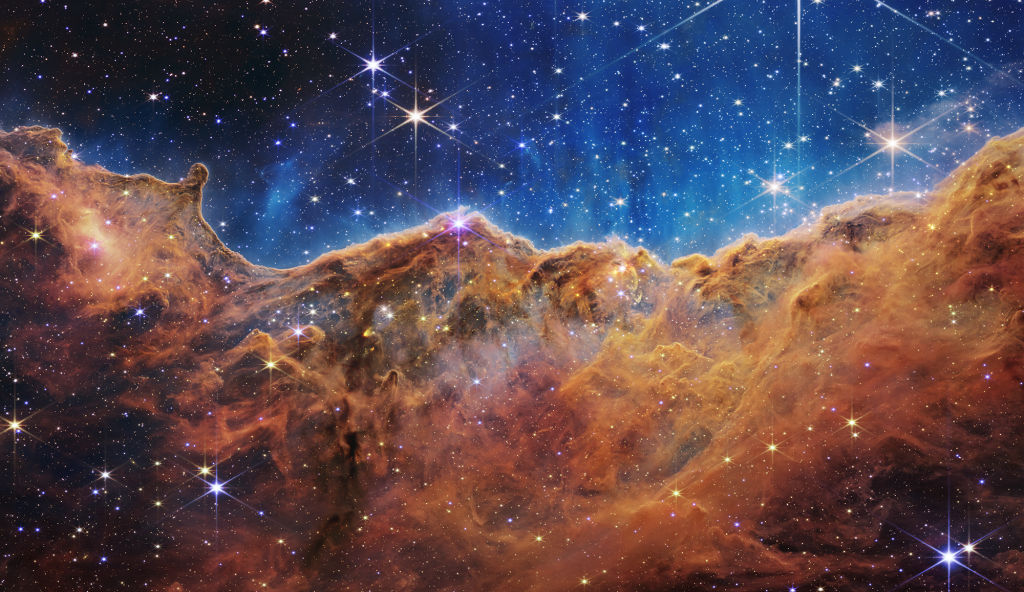
About the Cosmic Cliffs
Located near the edge of the Carina Nebula, the “Cosmic Cliffs” of NGC 3324 are made up of massive clouds of dust and gas left behind from the formation of new stars. Stellar winds and ultraviolet radiation from newly-born stars push away the dust and gas to form the stunning shapes we see today.
At only 12 million years old, NGC 3324 is a prime location for the birth of new, massive stars significantly larger and hotter than our sun. Many of these stars are visible in the image, and diffraction spikes from an exceptionally large star just out of frame can be seen at the top of the image.
NGC 3324 was first discovered in 1826 by Scotish astronomer James Dunlop. It can be found near the constellation Carina, which is visible only from the southern hemisphere.
About the Image
When the James Webb Space Telescope published its first images in July 2022, the “Cosmic Cliffs” quickly became the premier image for the new telescope. This iconic image was one of the first captured with JWST’s near-infrared camera (NIRcam), and was created by combining and recoloring multiple wavelengths of IR light.
For more information, please visit webbtelescope.org.
Bonus Image
Did you know that this 16 light year section of the universe was chosen specifically to showcase the capabilities of the James Webb Space Telescope? Compare it to the same image captured by Hubble in 2008.
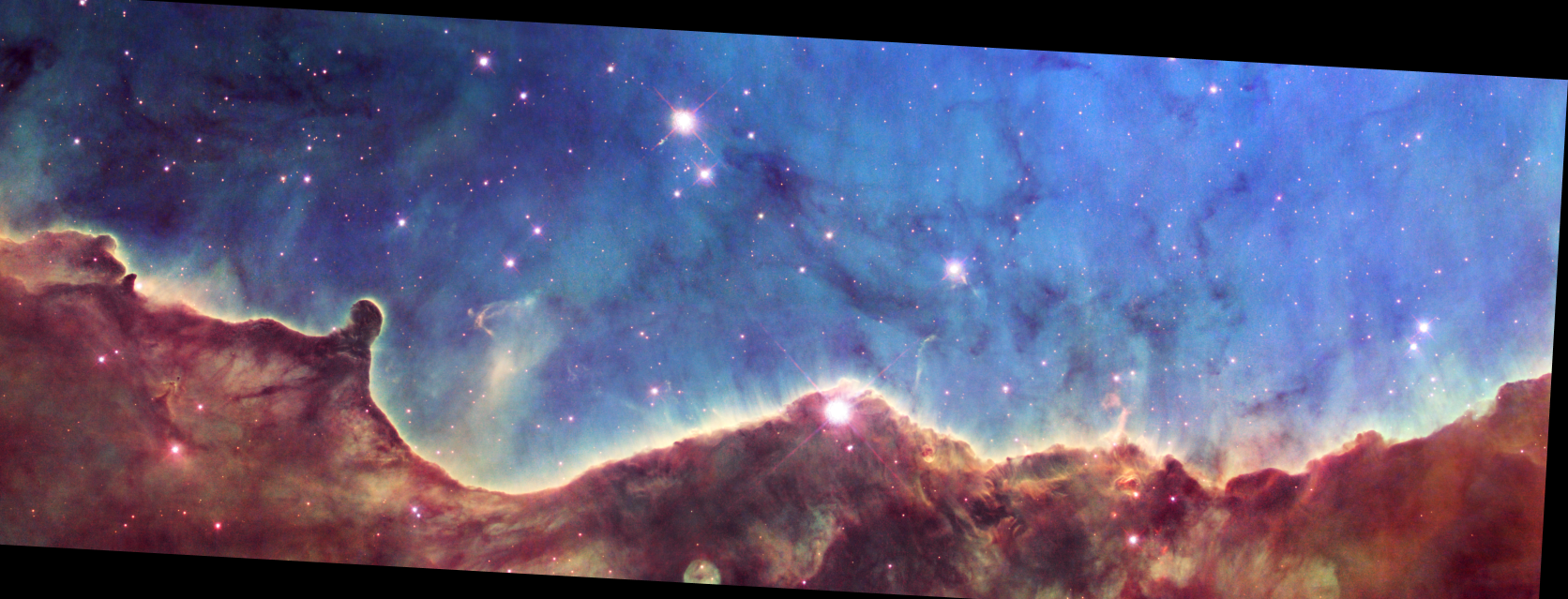
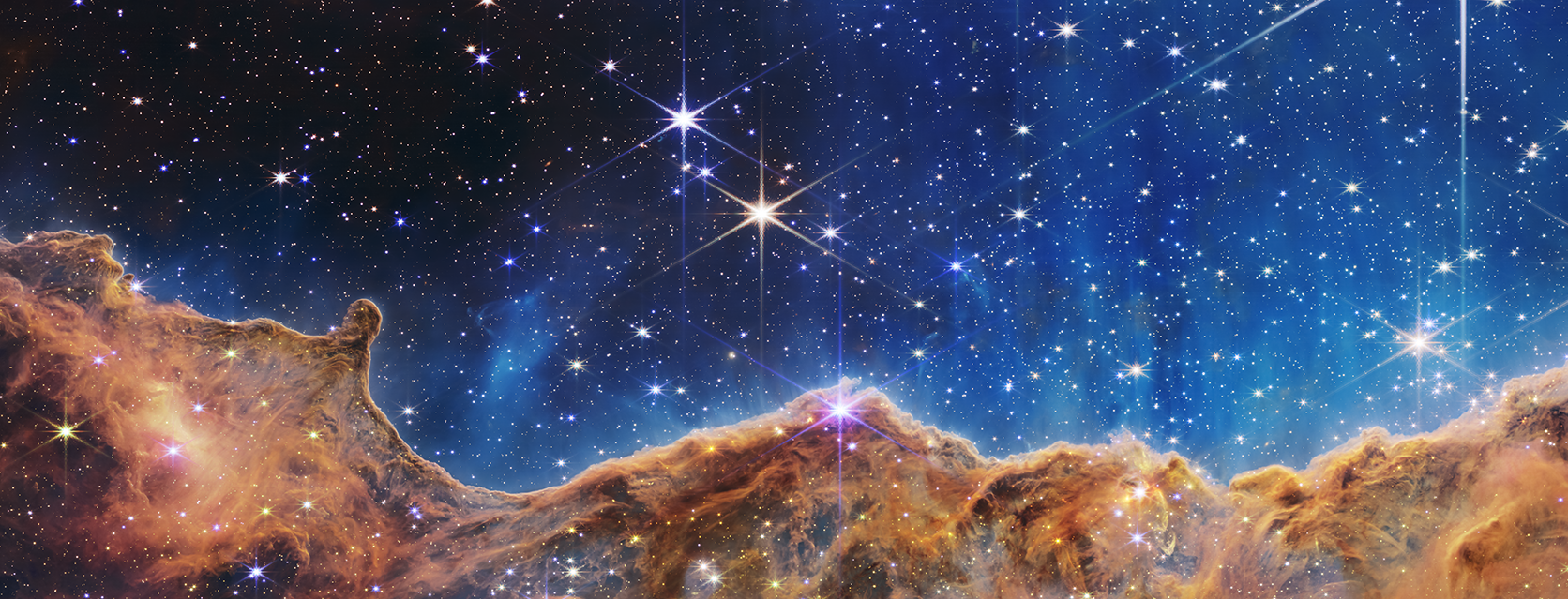
 JASON KAVENEY